Trade show season in Hong Kong is a busy stretch for anyone in beauty. Buyers from Europe, North America, the Middle East and across Asia fly in, walk the halls, feel the products in their hands, and leave with bags of catalogs and business cards. If you're one of them — here to find hair straighteners, curlers, dryers, or a factory that will put your logo on a hot air brush — this one's written for you.
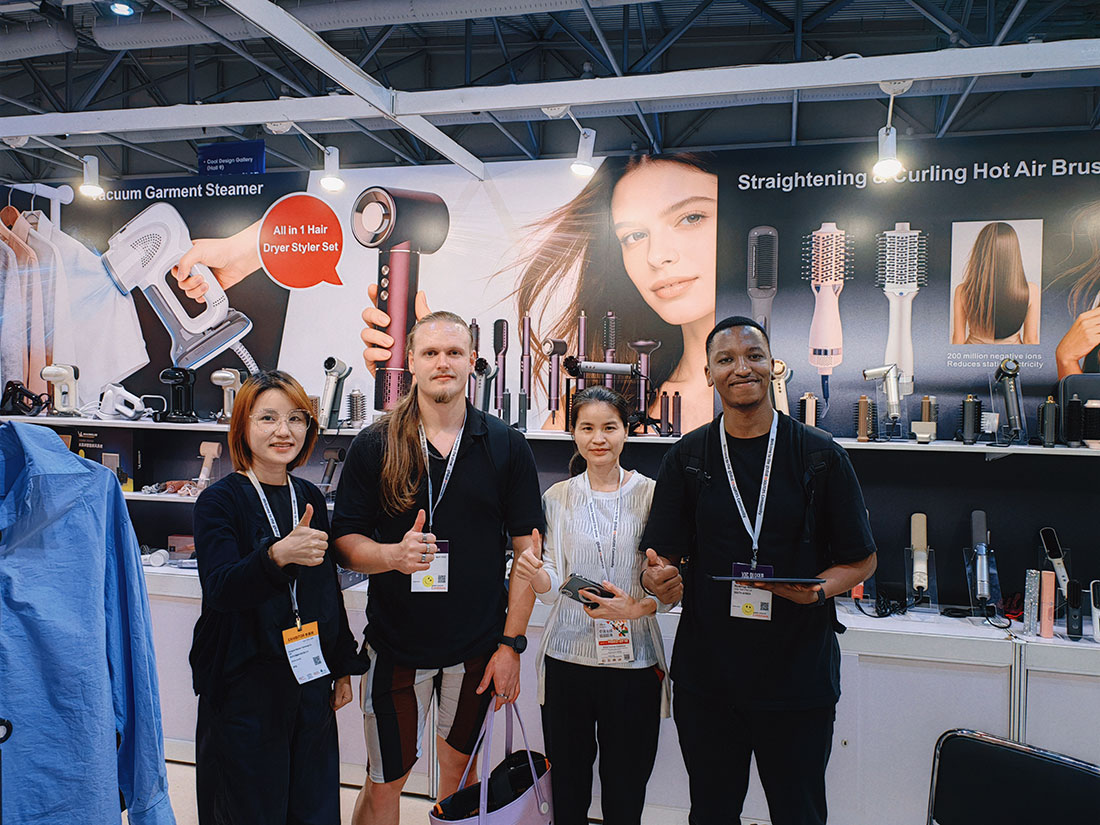
The usual plan sounds simple: walk the show, collect samples, compare prices, pick a partner. But most buyers leave with a shorter shortlist than they hoped. The exhibition floor only shows you so much. The real decision usually gets made later — back at the hotel, or at home — when you sit down and compare a few Chinese manufacturers, some you met in person, some you found online after the show.
That's where most of the actual sourcing work happens. This guide walks through what to look for at the show, how to compare suppliers fairly once you're comparing them, and where private label fits into your plan.
What the show doesn't always give you is the full picture. Exhibitors in Hong Kong are often trading companies or regional offices, and the actual factory sits somewhere in mainland China. For many buyers the smart move is to treat the show as the starting point, then keep comparing factories online and, where practical, arrange a factory visit.
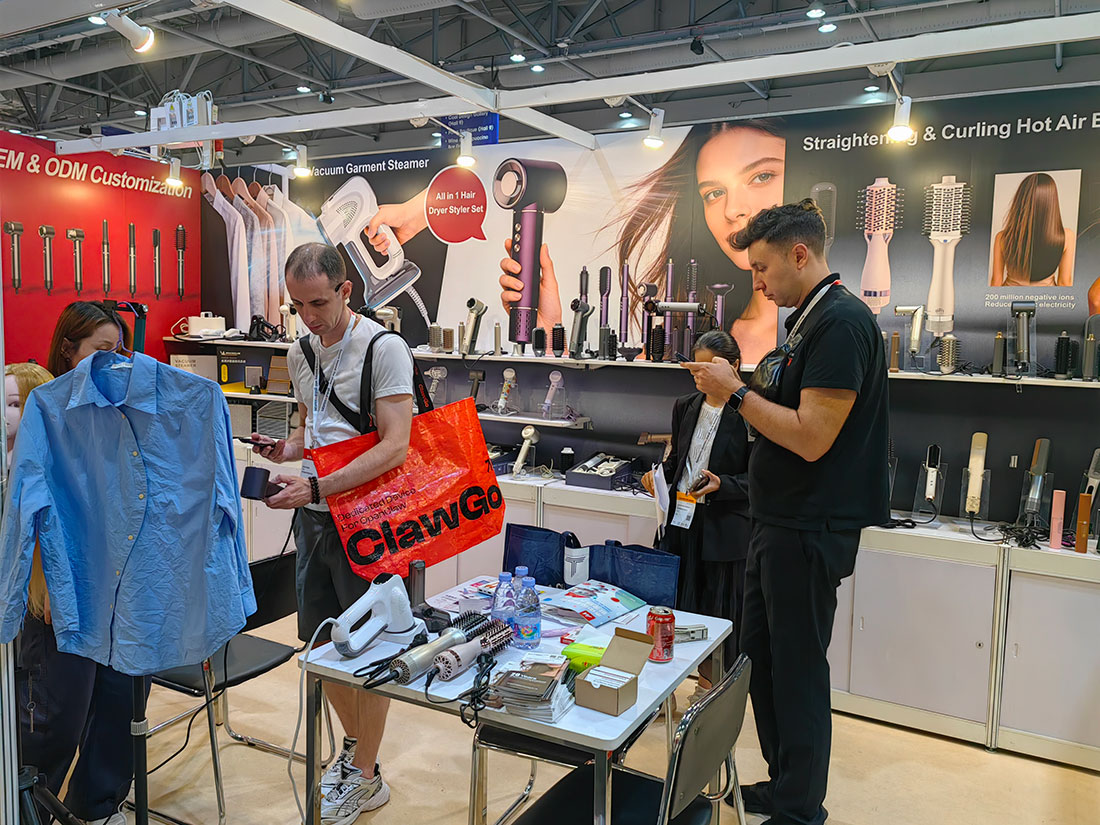
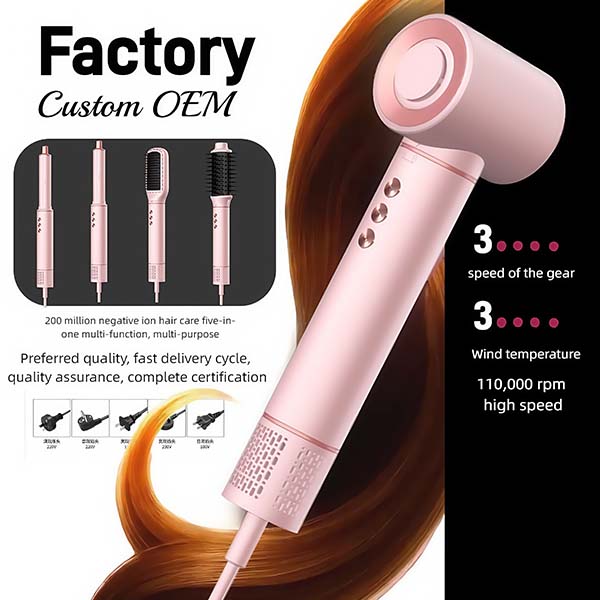
A few numbers worth understanding before you talk to suppliers: motor speed, airflow, wattage, and noise. High-speed brushless motors run in the tens of thousands of RPM — a common figure is around 110,000 — and that's what lets a dryer push serious airflow without relying on extreme heat. Wattage matters for a different reason. A 1300W unit runs fine on ordinary household circuits, which is a real selling point for students, renters, and hotels. A 2000W+ unit can be a problem in places with sensitive wiring.
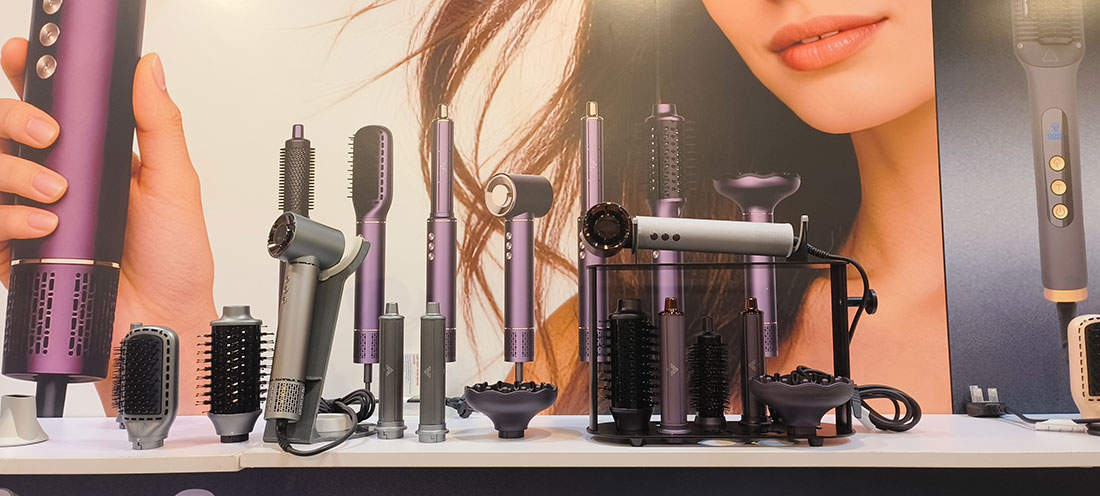
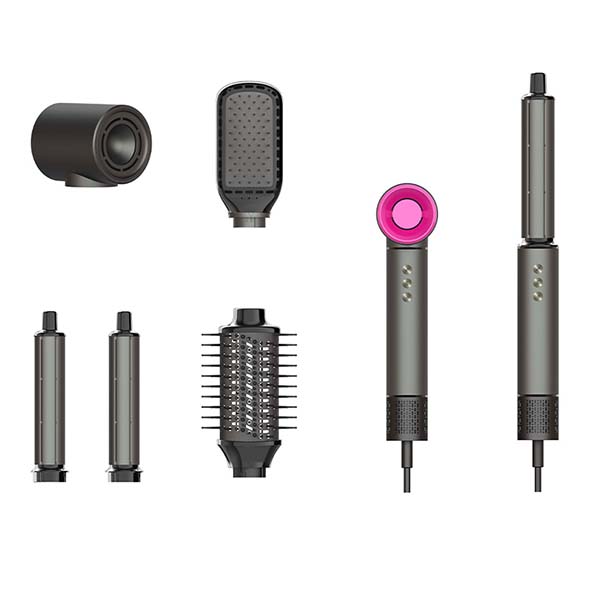
Don't skip the practical details. Check for a fine dust filter that keeps hair out of the motor, whether the attachments are magnetic and easy to swap, and how loud it actually is. "Quiet" means different things to different factories, so if noise matters to your market, ask for a decibel figure or a demo video. And for any market you're entering, make sure the certifications line up — CE and RoHS for Europe, FCC and UL for the US, PSE for Japan, and so on.
If time allows, visit a factory in mainland China. Shenzhen and the Pearl River Delta are close enough that a day trip is realistic from many Hong Kong shows. A visit tells you things a catalog can't — how clean the line is, whether they actually control their own production or just resell, and whether the people you're dealing with know their own products.
There's no single right answer, and anyone who tells you one channel is always better is oversimplifying. It depends on your order volume, your delivery needs, and your total landed cost — not just where the supplier happens to be based.
|
Purchasing Factor
|
Hong Kong-Based Suppliers
|
Mainland China Manufacturers
|
|
Communication
|
Easy for in-person meetings during the show
|
Usually handled through export sales teams
|
|
Product availability
|
Depends on what the supplier stocks
|
Depends on factory models and current inventory
|
|
Private label services
|
Varies by supplier
|
Many factories offer logo and packaging customization
|
|
Pricing
|
Depends on the sourcing arrangement
|
Direct sourcing can cut out intermediary markups
|
|
Factory visits
|
Depends on their operations
|
Often possible where factory access is arranged
|
|
International shipping
|
Depends on their supply chain
|
Depends on export arrangements and destination
|
Hong Kong suppliers can be a good fit when you value convenience and local support, especially if you're dealing in smaller volumes or want a trading partner who handles logistics for you. A mainland factory becomes more attractive when you need volume, want the lowest possible unit cost, or need deep customization — the things that are easier to do close to the actual production line.
For most buyers it's not either-or. A common pattern is to meet suppliers in Hong Kong, then evaluate the factory behind them before committing. The supplier gets you the introduction; the factory visit and the sample order decide the deal.
Private label is how many beauty brands and distributors grow without inventing a new product from scratch. You take a proven, existing model, add your branding, and sell it under your own name. It's faster, cheaper, and far less risky than commissioning a new design — provided you understand what's actually on offer.
Most factories that support private label can print or engrave your logo on existing models. Before you get excited, confirm the branding method (screen printing, engraving, pad printing — it varies by surface material), where the logo can go, and whether they'll approve artwork before production. Small details like this are exactly what cause friction later if left to assumption.
Packaging is where private label products win or lose at retail. A branded box with your logo, your product claims, and your barcodes does a lot of the selling before anyone picks the tool up. For e-commerce, printed inserts and clean, shippable packaging matter just as much. Ask what packaging options the factory offers and which ones suit your channel — a salon wholesaler and an Amazon seller often want very different boxes.
One honest note: options, MOQ, and lead times all depend on the specific product and your order. If a supplier focuses on private label and light customization, don't expect them to redesign a product from scratch. Ask clearly what's included, and build your plan around that.
Shenzhen Baiyisen Health Technology Co., Ltd. was established in 2016, and the core team behind it has more than fifteen years in beauty and home care appliances. We design and manufacture our own products, which means we can handle R&D, structural design, electronic integration, and manufacturing optimization internally instead of passing work to third parties.
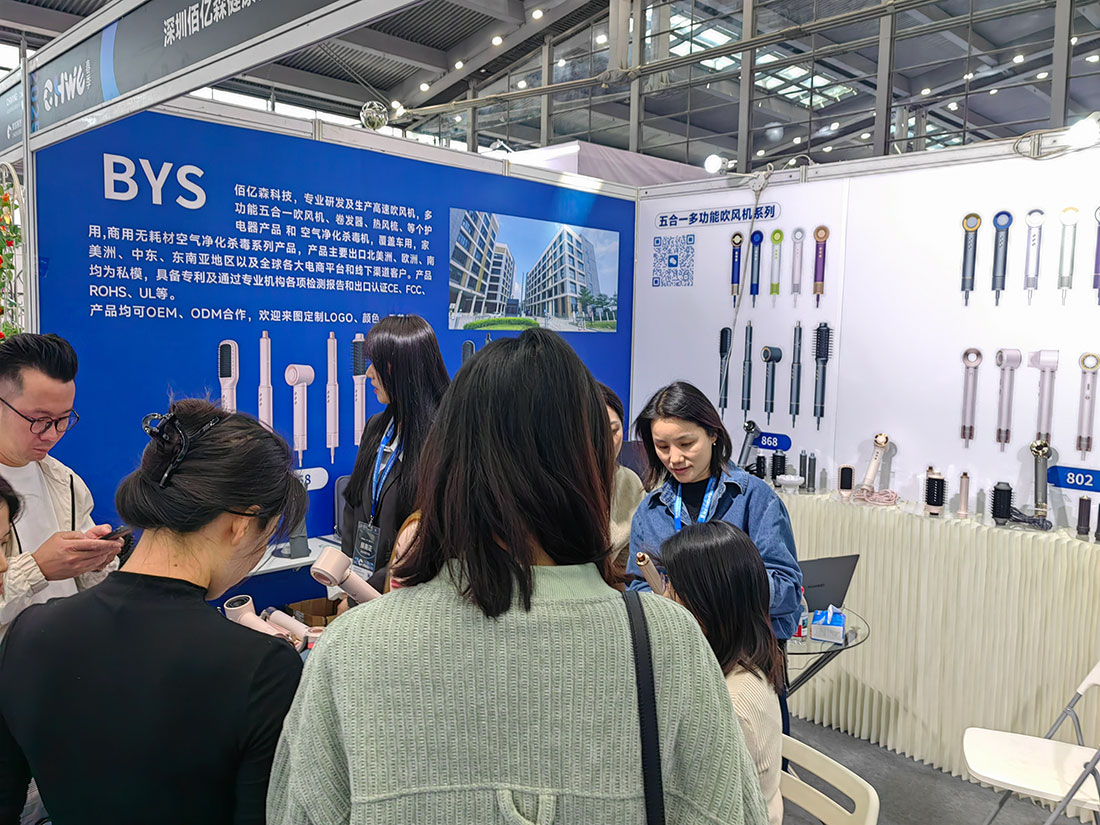
Our product range covers the categories this article has been about and a few more: hair straighteners, high-speed hair dryers, hot air brushes, plus handheld garment steamers, high-temperature steam cleaners, and infrared EMS combs. We work with global brands, distributors, and retailers, and we've exported to more than seventy countries across Europe, Asia, North America, South America, and the Middle East.
On the manufacturing side, our standardized facility covers about 15,000 square meters, with six production lines and twelve advanced machines. A 5,000-square-meter warehouse supports inventory management and order fulfillment, and for standard single-color products our MOQ starts at just 1,000 units — which makes us a practical partner for an emerging brand testing a market, not just for large enterprises.
Materials matter in this category, and we build with quality inputs: ABS, PC, aluminum alloy, and PA66+GF30% where the application calls for it. Our products carry the certifications needed for major markets — CE, RoHS, FCC, UL, and CB — and we're backed by technical patents and testing reports that let us take on complex OEM projects and meet strict quality requirements.
If you're a buyer who meets suppliers in Hong Kong and wants to keep the conversation going, we can work online — product catalog, samples, quotations, the whole evaluation process — and we can also arrange a factory visit where practical. Our project management runs on responsive 24/7 communication, so whether you're in a different time zone or simply between flights, there's usually someone around to answer.
For private label and ODM work, we offer product appearance design, logo customization, packaging solutions, and production support. And because our main models use private-mold designs rather than off-the-shelf public molds, there's less worry about patent conflicts, and more control over quality and market positioning.
The common thread is that these buyers want to build a branded offering without commissioning a completely new product. Existing models with custom branding give you that — a product that's yours in the market, at a fraction of the cost and risk of a from-scratch design.
Evaluate samples, specifications, certifications, MOQ, total landed cost, lead time, warranty terms, and how responsive they are. A supplier who answers clearly and quickly during the quoting phase is usually a better partner than one who goes quiet once you're a customer.
From there we can send you our product catalog, walk you through sample requests, and put together a quotation based on what you actually need. Whether you continue the conversation online from home or arrange a factory visit while you're in the region, we're set up to work either way.